
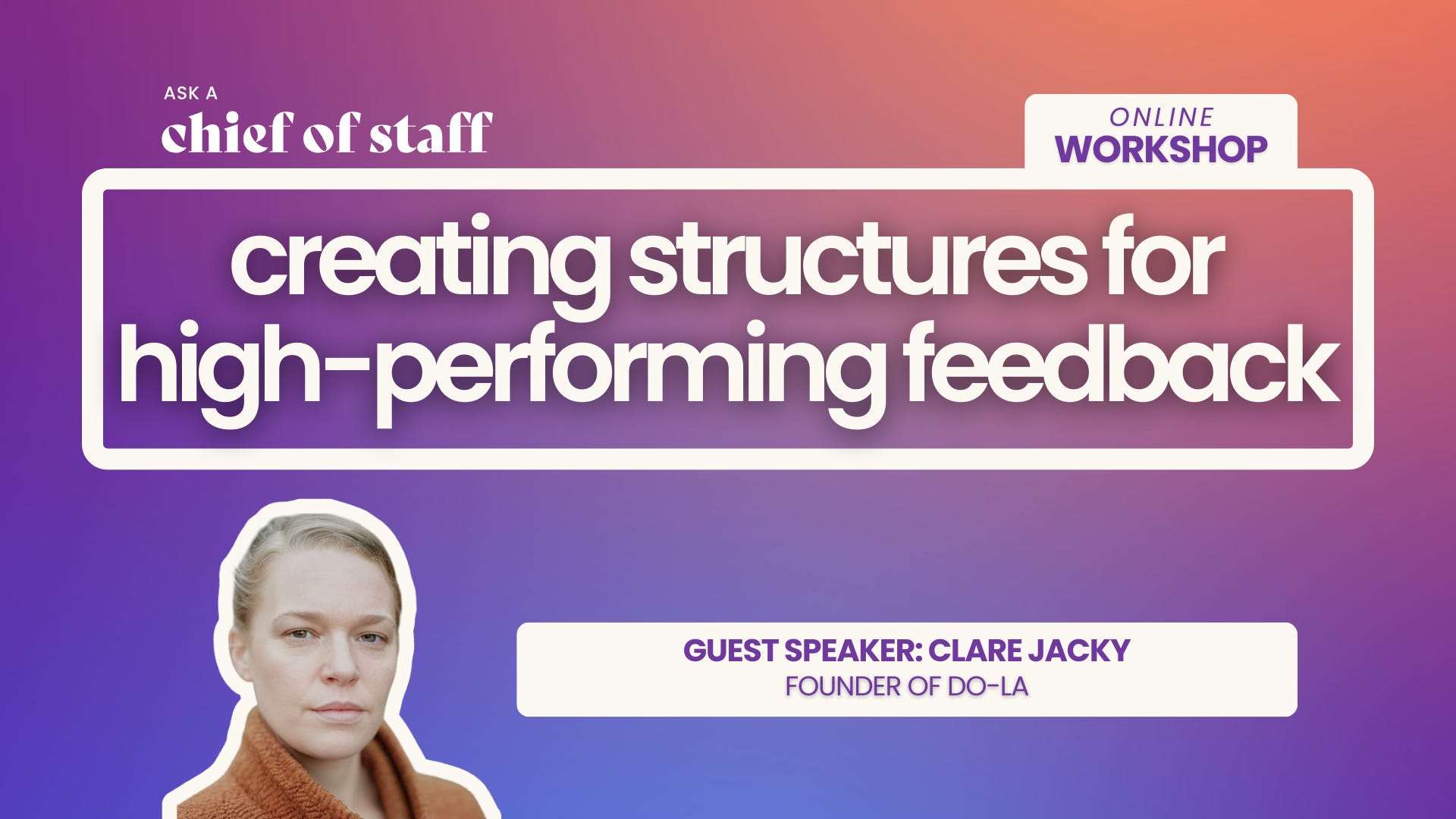
Member Exclusive: Creating Structures for High-Performing Feedback
How Chiefs of Staff can create a robust feedback culture that drives success

THANK YOU for being a premium subscriber to Ask a Chief of Staff 💜
📹 Member Exclusive Recording - This is a previously recorded workshop from our archive, available exclusively to paid members. Free subscribers can preview the content below, then upgrade to watch the full workshop.
Most Chiefs of Staff step into the role without a roadmap.
You’re figuring it out as you go. Your leader probably can’t tell you exactly what they need. And you’re wondering: Am I doing this right? 🤷♀
In her workshop, Clare Jacky gives you the roadmap she wishes she had, including the structures that turn feedback from an awkward quarterly event into a seamless part of your culture.
🧑🏫 About the Speaker
Clare Jacky is the founder of Do-La, a People and Business Operations consultancy. She’s held ops and people roles at tech startups from early seed to post-exit, served as Chief of Staff twice, and now helps founders build the operational foundations that scale.
Clare works with clients on strategic planning, operational rhythm, people practices, change management, and leadership development. She’s also deeply committed to coffee, effectiveness, and tarot cards.
📚 About the Workshop
Feedback is fundamentally important for high-performing organizations. It’s also innately hard.
Most of us have physical and emotional responses to feedback: flushed faces, fidgeting, defensive reactions. And in many organizations, feedback only happens when things go wrong, which makes it feel like punishment rather than growth.
This workshop tackles the “human problem” of feedback by creating containers: structured moments where feedback becomes expected, normalized, and actionable.
You’ll see how one simple shift (compulsory feedback in 1:1s) removes the anxiety from both giving and receiving critical input.
💡 Key Takeaways You’ll Learn:
Define roles before you hire: Use a role expectations template to articulate mission, key metrics, deliverables, and cultural values, so feedback is anchored in clear standards, not subjective opinions
Feedback on Day 1: Set expectations during onboarding with a structured communication conversation about how feedback will happen and what works for each person’s brain
Compulsory feedback in 1:1s: Run the same template every time (what’s going well, what needs improvement, self-reflection), so feedback becomes routine, not a surprise
Separate tactical standups from growth conversations: Weekly standups handle work; monthly 1:1s handle development; this prevents managers from defaulting to only tactical discussions
Shared language of feedback: Give your team a common framework (Radical Candor, Action-Impact-Next Time, etc.) so everyone has an “on-ramp” to difficult conversations
Model the behavior: Use the Chief of Staff ↔ CEO relationship to demonstrate feedback publicly (feedback up, not down) so teams see it’s safe and productive
Practice reduces the nervous system response: Walking feedback, phone feedback, and regular repetition help people build the muscle memory to receive criticism without shutting down
The goal is growth, not firing: Delink critical feedback from job loss by making it a regular practice (annual reviews should have zero surprises)
