
Issue 53: How to Maximize 1:1s for Stronger Chief of Staff & Principal Alignment
Strategies for better syncing with your Principal


Welcome back, aspiring and current Chiefs of Staff 👋🏼
If you're reading this as a forward or from LinkedIn, subscribe to Ask a Chief of Staff to get these insights directly in your inbox. Join 9,000+ Chiefs of Staff who trust us for actionable insights.
This week’s issue is brought to you by Notion, an all-in-one workspace that brings together documents, project management, and AI capabilities into one intuitive platform
As a busy Chief of Staff, imagine having a centralized hub where you can:
Create dynamic wikis to house institutional knowledge
Manage complex projects with customizable views
Draft and edit documents with AI assistance
Instantly find information across your organization using AI-powered search
Automate routine tasks to focus on high-impact work
With Notion, you'll slash the time spent switching between apps and hunting for information. Its flexibility allows you to tailor workflows to your exact needs, whether you're coordinating executive initiatives, preparing board materials, or managing cross-functional projects.
*Interested in sponsoring a future issue of Ask a Chief of Staff? Hit reply!
🎯 How Can Chiefs Of Staff Have More Impactful Alignment Sessions With Their Principals?
This issue was prompted by a question I received from a community member about structuring alignment sessions with their Principal. I thought it was a great opportunity to share some best practices and tips for finding and implementing alignment strategies that support the Chief of Staff-Principal relationship.
As a Chief of Staff, alignment with your Principal is essential for success. Whether you’re supporting a CEO, a functional leader, or an executive team, effective alignment is the difference between being a strategic thought partner or just a project manager.
🤝 Trust: The Foundation Of Alignment
We’ve said it once and we’ll say it again: the cornerstone of any successful Chief of Staff-Principal relationship is trust.
This trust forms the bedrock of effective alignment sessions because it supports open and honest communication, efficient decision-making, constructive feedback, and strategic long-term planning. With a foundation of trust, Chiefs of Staff and their Principals can navigate challenges and work towards shared goals with confidence. When there is trust, a Chief of Staff will be better able to delegate and work autonomously.
To cultivate trust, focus on these key elements:
🔍 Transparency:
Transparency is all about embracing open and honest communication. Early in my role, I made the mistake of thinking I should only bring the “good news” to my Principal. But I quickly realized that holding back on challenges or concerns created more issues down the line.
Now, I make it a priority to share both wins and obstacles candidly. If there’s a roadblock, I lay out the details, along with potential solutions. This not only helps build trust but also makes our problem-solving conversations far more effective.
Radical Candor by Kim Scott is an excellent resource on this. The book advocates for giving direct feedback with empathy, which fosters transparency. It encourages “caring personally while challenging directly,” which is crucial in building a trusting, effective Chief of Staff-Principal relationship.
Actionable Tip: During 1:1s, make it a point to share one challenge you’re facing. It could be related to a project, a decision, or even workload. This habit can open the door to transparent dialogue and encourage your Principal to share their own challenges with you.
🎭 Authenticity:
Authenticity means showing up as your genuine self. Early on, I felt pressure to adopt a “professional” demeanor, thinking it was what my Principal expected. But when I started bringing my authentic self to our conversations, we connected on a much deeper level, and our alignment became more effective.
Being authentic doesn’t mean oversharing but instead involves being open about your strengths, weaknesses, and how you approach problems. If you’re struggling, admit it. If you’ve got an idea you’re excited about, show it!
Actionable Tip: Share a personal story or experience related to a current project. This not only reinforces your authenticity but can make it easier for your Principal to relate to you on a personal level. One Chief of Staff I know even sat down to have dinner with her CEO and both parties brought their partners along so that they could get to know each other on a more personal level.
⏰ Reliability:
Trust is built on consistently delivering on your commitments. It’s one thing to set ambitious goals and another to follow through on them. If something unexpected comes up, communicate it early and adjust expectations as needed. Being reliable doesn’t mean you always have to succeed; it means being honest about what’s achievable and making adjustments as you go.
Actionable Tip: Before making a commitment, evaluate whether it’s feasible with your current workload. If you need more time, negotiate a deadline that works for both you and your Principal, and stick to it. If something unexpected arises, be proactive in updating them on your progress.
By focusing on transparency, authenticity, and reliability, you’ll be well on your way to cultivating a strong foundation of trust in your Chief of Staff-Principal relationship. Remember, trust isn’t built overnight, but small, consistent actions make all the difference.
🧭 Structuring Alignment Sessions With Your Principal
Effective alignment between a Chief of Staff and their Principal doesn’t happen by chance. Alignment requires intentional, well-structured sessions that foster communication, set priorities, and ensure both parties are working together towards organizational goals.
Let’s explore a proven framework for alignment that Chiefs of Staff can employ:
🌅 Daily Practices
Start-of-Week Highlights Email
Begin each week with a concise overview of key priorities and upcoming events. This email serves as a roadmap so your Principal can mentally prepare and align their focus for the week ahead.
Key components:
Top 3-5 priorities for the week
Significant meetings or events
Any potential challenges or roadblocks
Brief Daily Check-ins
These quick touch points, often lasting just 5-10 minutes, are for addressing urgent updates or aligning on the day's priorities.
Tips for effective daily check-ins:
Keep them brief and focused
Use a consistent format (e.g., “Top 3 things you need to know today”)
Be prepared to adjust priorities based on new information
📆 Weekly Routines
Tactical Stand-Up (15-30 minutes)
This focused meeting is your opportunity to review immediate priorities, address roadblocks, and ensure alignment on short-term goals.
Agenda items to consider:
Progress on key initiatives
Obstacles requiring attention
Priorities for the coming week
Any decisions needed from the Principal
Calendar Audit and Intention Setting
Take time each week to review how your Principal’s time is being spent and set intentions for the coming week. Work with your Principal’s executive assistant to ensure efforts aren’t being duplicated and that that your Principal’s time aligns with organizational priorities and personal goals.
Questions to guide this process:
Is the Principal’s time allocation reflecting strategic priorities?
Are there meetings that can be delegated or eliminated?
What are the key objectives for the upcoming week?
How can you create space for strategic thinking and important but non-urgent tasks?
🌔 Monthly or Quarterly Check-ins
Strategic Review Sessions
These longer, more in-depth meetings are important for discussing long-term goals and assessing progress. Use this time to step back from day-to-day operations and focus on the bigger picture.
Topics to consider covering:
Progress towards long-term objectives
Emerging opportunities or challenges
Alignment of current activities with strategic goals
Team performance and dynamics
Personal development goals for both Chief of Staff and Principal
Reflections on "Moments of Trust"
Regularly identify and discuss key interactions that have built or tested your working relationship. This exercise fosters continuous improvement and strengthens your partnership.
Reflective questions:
What moments strengthened our alignment this month/quarter?
Were there any instances where we were out of sync? How can we prevent that in the future?
How can we build on our successes to become even more effective?
Are there any skills or areas where either of us needs additional support or development?
By implementing this structured approach to alignment sessions, you create a rhythm that keeps you and your Principal in sync, proactive, and focused on what matters most.
3️⃣ Powerful Strategies For Effective Alignment Sessions
Structuring regular alignment sessions is just the first step. The real magic happens when you implement specific practices to maximize their effectiveness.
Here are three powerful strategies that successful Chiefs of Staff use to enhance their alignment with their Principals:
1⃣ Implementing "User Manuals" For Work Styles
A user manual is a game-changer for understanding and adapting to your Principal's work style. It’s essentially a document that outlines preferences, habits, and best practices for working together effectively.
Key components of a user manual:
Communication preferences (e.g., email vs. phone, frequency of updates)
Decision-making style (e.g., data-driven, intuitive, collaborative)
Work schedule and energy patterns
Preferred methods for receiving feedback
Common misunderstandings or potential friction points
Pro tip: Extend this practice to your entire leadership team, and even whole organization, for even better organizational alignment.
2⃣ Using "Even Over" Exercises For Priority Setting
The "Even Over" exercise can provide clarity when faced with competing demands, especially when both have potentially positive outcomes. It helps you and your Principal clarify priorities and make decisions about resource allocation.
How it works:
Identify two positive outcomes or qualities that seem to be in conflict
Frame them as an "Even Over" statement: "We value X even over Y"
Discuss the implications of this choice
Examples:
"We value quick execution even over perfect planning"
"We value innovation even over maintaining the status quo"
"We value team cohesion even over individual performance"
Remember, the goal isn’t to completely disregard the second option, but to provide clarity when trade-offs are necessary.
3⃣ Leveraging Technology For Seamless Alignment
Technology can be a powerful tool in maintaining alignment with your Principal. The right tools can streamline communication, enhance transparency, and ensure nothing falls through the cracks.
Effective ways to leverage technology:
Shared documents: Use tools like Google Docs or Notion for real-time collaboration on agendas, strategic plans, and action items.
Project management software: Platforms like Asana or Trello can help track progress on key initiatives and deadlines.
Slack bots: Custom Slack bots can automate routine check-ins or reminders to ensure consistent communication without adding to your workload.
Calendar integration: Use tools that sync with your Principal's calendar to stay updated on their schedule and help manage their time.
By implementing these best practices—user manuals, "Even Over" exercises, and strategic use of technology—you can make your alignment sessions even more productive.
🔍 Refining Your Alignment Strategies
As you implement your alignment strategies, it’s important to make sure they’re actually working as planned. If you or your Principal aren’t seeing positive results from the effort being put in, it’s ok to take a step back, reassess, and refine your strategies.
Consider a mix of both informal and data-driven strategies to determine whether your alignment sessions are on the right track:
Schedule review sessions: Set up quarterly or bi-annual meetings specifically to discuss the effectiveness of your alignment practices.
Solicit specific feedback: Ask your Principal for input on particular aspects of your alignment strategy, such as the frequency of check-ins or the format of your reports.
Be open to criticism: Create an environment where your Principal feels comfortable providing constructive feedback.
Self-assessment: Regularly evaluate your own performance and the effectiveness of your alignment practices.
Experiment with new approaches: Based on feedback and self-assessment, don't hesitate to try new methods or adjust existing ones.
Monitor key indicators: Keep track of metrics that reflect the health of your alignment, such as the number of surprises your Principal encounters or how often your recommendations are accepted.
Stay informed: Keep up with best practices in the field by networking with other Chiefs of Staff and staying current with industry literature.
By regularly assessing and adjusting your alignment practices, you ensure that your role as Chief of Staff continues to add maximum value to your Principal.
🏁 Putting It All Into Practice
Building strong alignment with your Principal is an ongoing journey, not a destination.
When implementing these practices, keep in mind:
Trust is your foundation. Cultivate it through transparency, authenticity, and reliability.
Flexibility is key. Be prepared to adjust your approach based on your Principal's preferences and the organization's needs.
Use technology wisely. Tools like shared documents, project management software, or even custom Slack bots can streamline your alignment processes.
Continuously seek feedback. Regularly ask your Principal how these sessions are working for them and be open to adjustments.
Lead by example. Use these sessions to demonstrate the value of structured communication and alignment to the broader organization.
Be prepared. The more you put into preparing for these sessions, the more value you'll get out of them.
Start by choosing one strategy from this article to implement this week. Whether it's creating a user manual or scheduling a new type of alignment session, taking action is the first step towards stronger alignment.
Remember, the most effective Chief of Staff-Principal relationships are built on mutual understanding, clear communication, and a commitment to continuous improvement. By focusing on these elements, you'll not only enhance your effectiveness but also drive greater success for your organization as a whole.
🎥 Upcoming Events and Workshops:
💻 Virtual Events
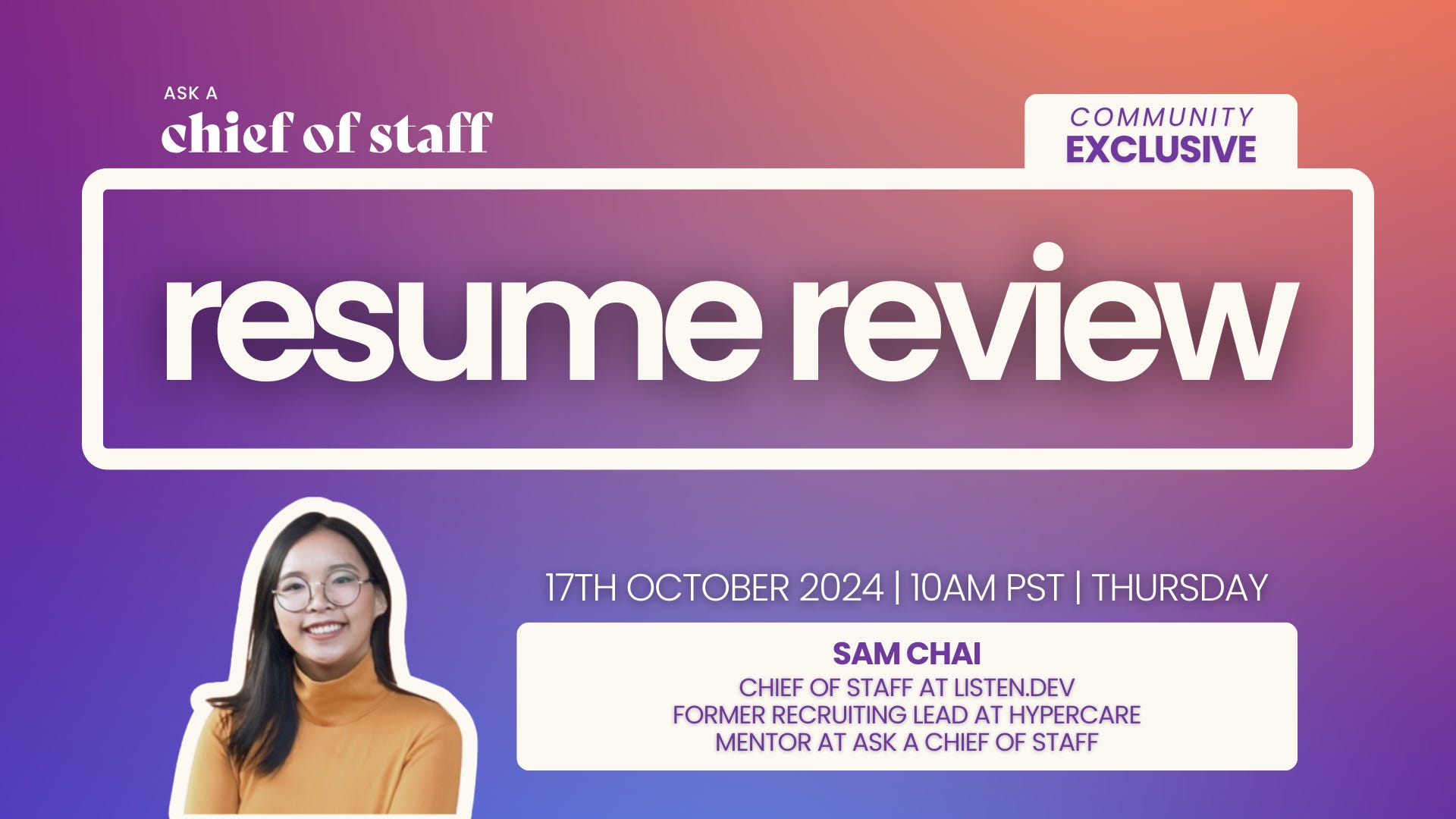
October 17th: Peer Resume Review
October 24th: Building and Streamlining Your Operations with Sheryl Ryan
October 29th: Communication Challenges on the Job with Liz Marion
This month’s workshops are all community exclusive. If you’re interested in attending any of these workshops, reply to this email!
👋🏼 In-Person Events
October 30th: Coffee and Co-Working at Industrious (NYC) [free and open to all]
As a reminder, events and workshops are free or heavily discounted for all Ask a Chief of Staff community members.
📖 Additional Chief of Staff Related Reads:
The Conductor: Manages the organization’s strategic rhythm
Strategy Roles Demystified: How Strategists Bring Value to an Organization
The GitLab Handbook: Chief of Staff to the CEO
📚 Want to Get Free Ask a Chief of Staff Workshops?
Have you heard about the exclusive new benefit for paid Substack subscribers?
✨ One free pre-recorded workshop each month ✨
Paid members already have access to the first workshops. Check them out and upgrade to unlock future workshops! 👇


One day I will have to write about this but being your authentic self is crucial. Not using canned techniques if they don't fit your style of connecting is another. How can you build an organic trusting relationship if you are awkwardly stumbling through someone’s team building playbook? You have to be you but aim to read the room. You may have more than one way in which you've brought down someone's protective walls, so if you get the sense that one tactic doesn't work, perhaps another would be more compatible to reach your principal.